GORE-TEX — Handoffs for a weather laminate
Four checkpoints between a shell brief and an order note.
- Brief
- Specimen
- Approval record
- Order context
Sample-to-bulk handoffs
-
1
Define the laminate
Write the face first. Name the fibre blend, the yarn linear density in denier or dtex, and the weave. Then state whether the functional layer is described as an ePTFE membrane, an ePE membrane, or a coating. A search phrase such as gore-tex epe membrane is useful only after that layer is tied to a face and a backer. Add target GSM with the unit g/m2 and say whether the number is a wish or a measured specimen. Usable width should be separated from the full cloth width, because seam allowance and selvedge are not the same cuttable area. If a durable water-repellent finish is part of the question, say whether it is already on the reference swatch.
-
2
Review the specimen
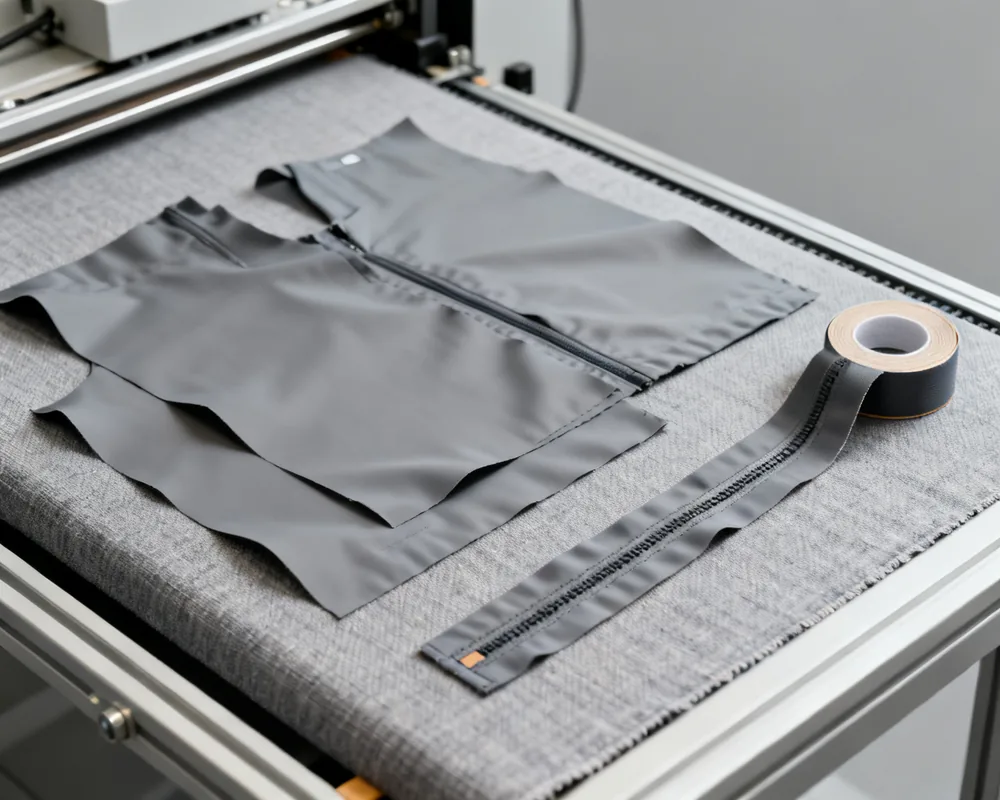
Lay the submitted cutting next to the dated reference. Compare handle, face texture and the inner surface. A 2-layer laminate still needs a lining decision. A 2.5-layer build puts a raised or printed inner treatment where a separate lining would have been. A 3-layer build already includes a backing, often a knit, and that backing changes both comfort and how seam tape sits. Record the specimen condition: as received, after a stated wash, or after a flex cycle. Do not treat a showroom photograph of a finished jacket as the specimen. This page discusses fabric and membrane systems, not finished garments or footwear.
-
3
Approve the record
Shade, handle and seam behaviour are different approvals. A hydrostatic reading under ISO 811:2018, with the pressure unit written beside it, does not approve colour. A Ret value from ISO 11092 does not approve seam-tape adhesion. If the buyer is comparing gore tex fabrics across two layer counts, keep each report attached to its own construction. Note the standard edition year that is printed on the sheet. When the edition is absent, the comparison waits. An approval note should also say who looked at the physical swatch and under what light, because a screen rendering of olive or navy is not a shade band.
-
4
Confirm the order fields
Quantity and destination describe the commercial conversation. They do not create stock, a minimum, or a delivery date. A gore-tex fabric price question belongs here, with the construction already named, because a single number cannot cover a 70-denier 2.5-layer shell and a heavier 3-layer alpine laminate. Ask which roll, cut-length or sample format is relevant, and leave timing as a field to be answered in the reply. If a certificate is part of the approval, the holder, the covered product and the validity date travel with the swatch. A logo on a website is not that record.
Prepare the next handoff
Send the swatch identity and the exposure you need the method to represent.