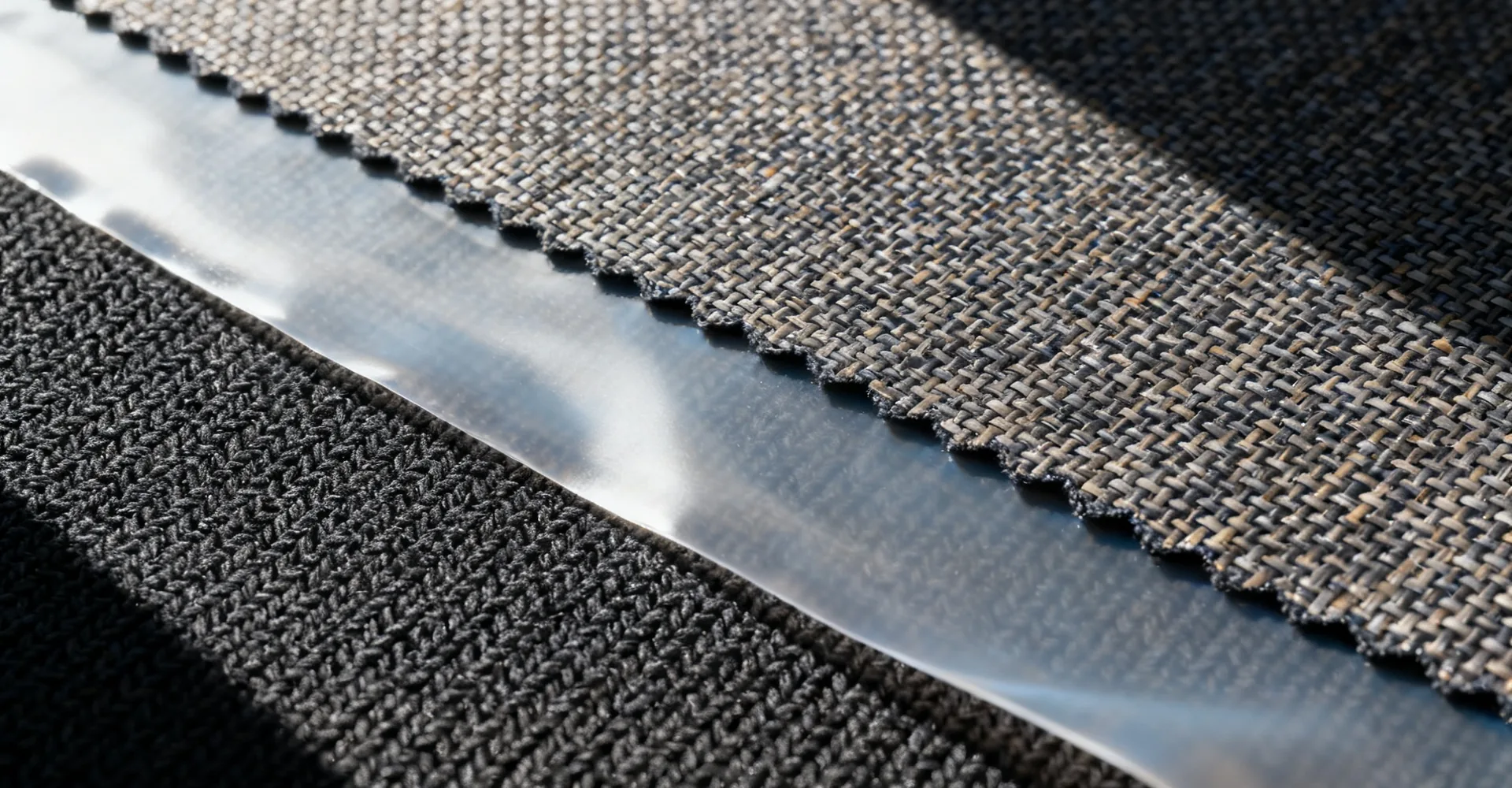
Macro cross-section of an unbranded weather laminate showing face, membrane and backing

Explore the construction

GORE-TEX — Read each layer before the weather claim

Face
Shell hand, weave and surface finish.
Functional layer
Liquid barrier kept apart from vapour movement.
Backing
Support for cutting, seam tape and next-to-skin comfort.
Discuss your fabric requirements
  1. Match the document holder to the material actually being discussed.
  2. Read the product and process scope, including face, membrane and any seam tape.
  3. Record the standard edition and the report date before two numbers are placed side by side.
  4. Ask whether that record still describes the requested construction, shade and finish state.

Material scope for weather protection

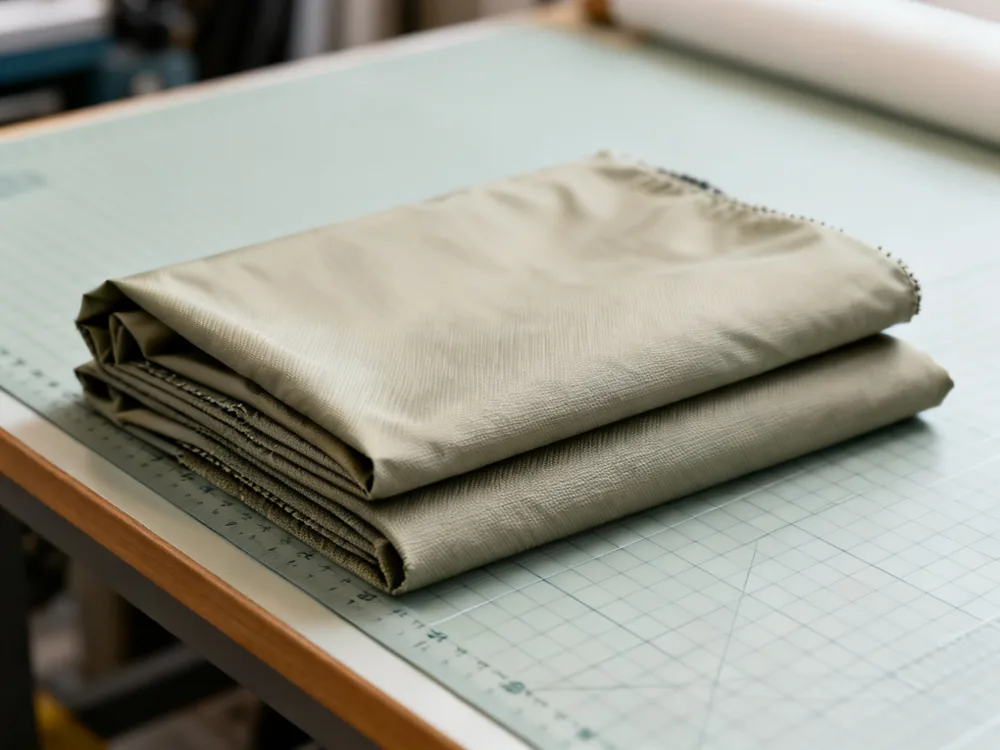
Unbranded performance shell face fabric folded on a cutting table

Performance shell face

Buyers searching gore tex performance shell fabric usually need the face construction named: fibre, denier or dtex, weave, and whether a durable water repellent sits on the surface. GSM alone does not describe that face.

Explore relevant materials
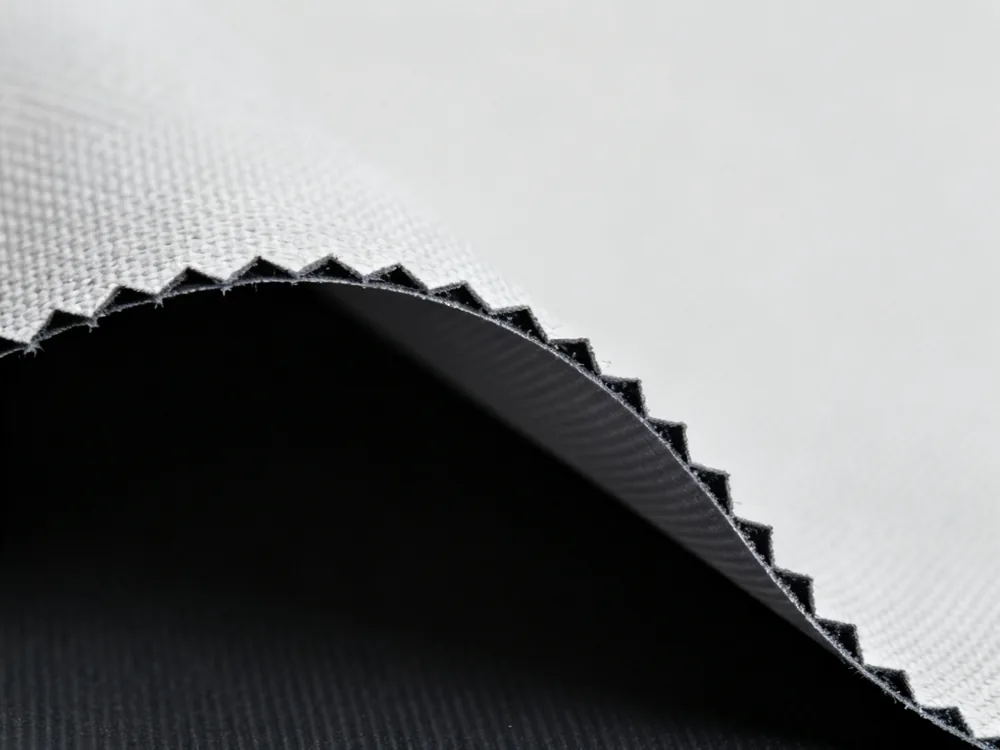
Cut edge of an unbranded membrane laminate under raking light

Membrane in section

A gore tex membrane question should say whether the functional layer is described as expanded PTFE or as an ePE layer, and which face and backer are bonded to it. Those words locate a construction. They are not a test result.

Explore relevant materials
Lightweight shell swatch beside a heavier three-layer laminate swatch

Lighter shell build

Searches for gore-tex paclite fabric often point at a lighter shell with less separate lining. Ask whether the piece is a 2-layer, 2.5-layer or 3-layer laminate, and how the inner surface will be worn or lined.

Explore relevant materials

Brief essentials

Material reference
A physical swatch, a construction note, or the words gore tex fabric tied to face weight and layer count.
Application
Rain shell, alpine shell or pack cover, plus the care and seam method you expect to use.
Order context
Quantity and destination for discussion. A gore-tex fabric price request needs those fields because no list price is published here.

Match the exposure

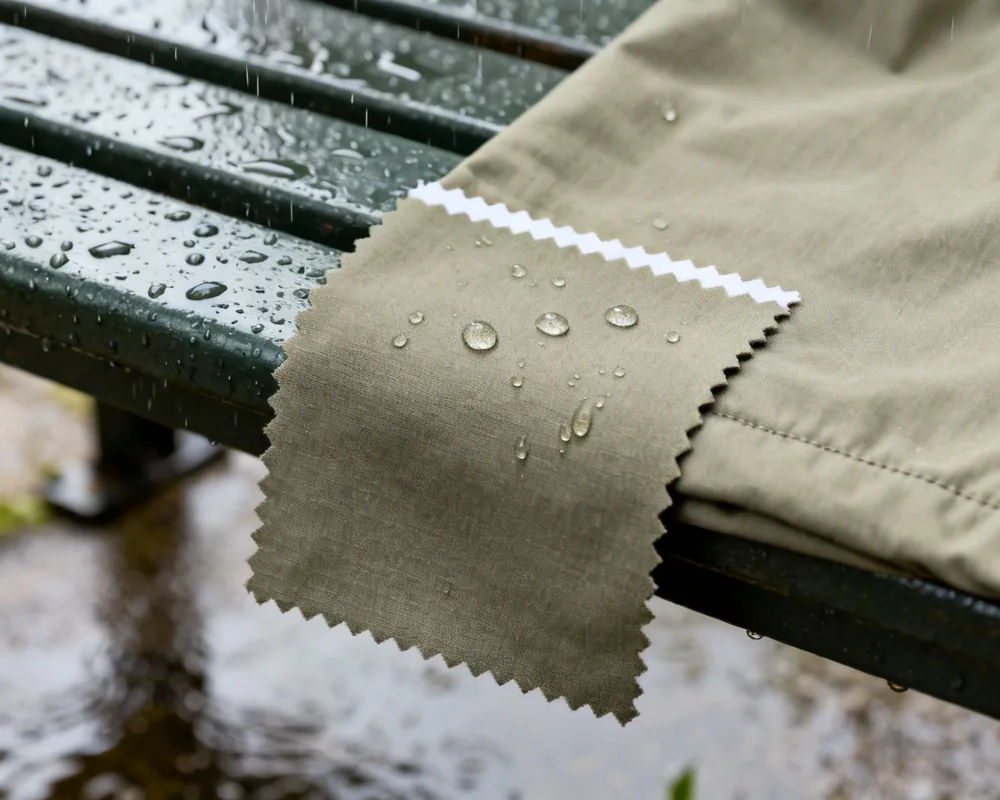
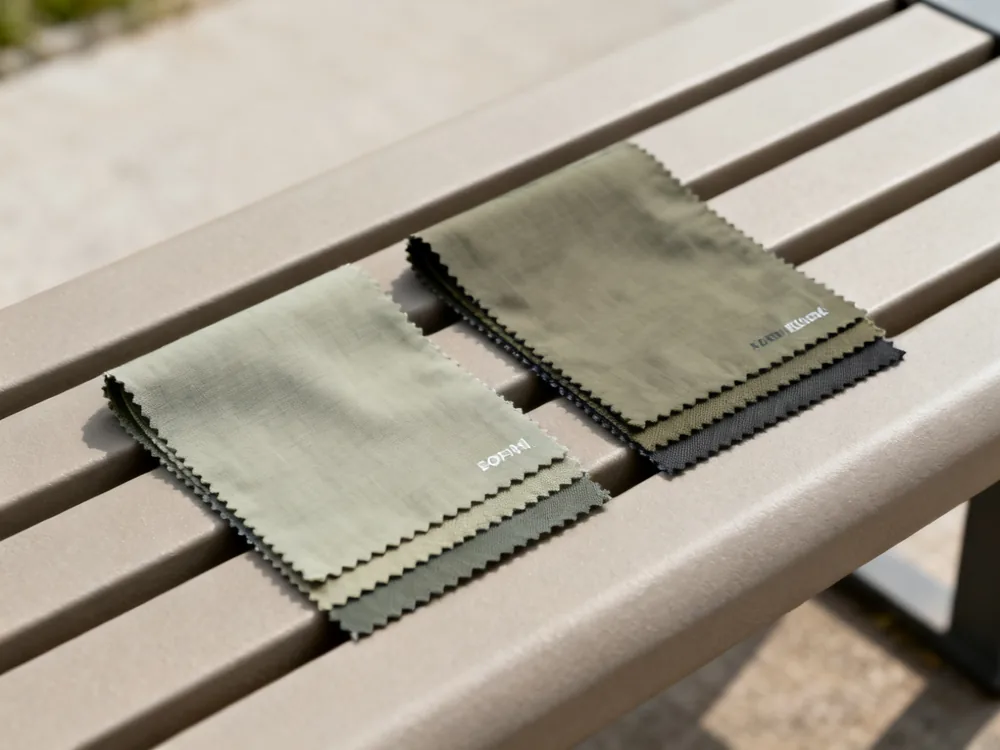
Unbranded shell swatches beside a wet-weather exposure bench
Environment
Separate driving rain, wind-driven alpine use and repeated packing. Each stress asks for a different method.
Experience
Handle, noise and next-to-skin comfort come from the face and the backing, not from a hydrostatic number.
Processing
Confirm usable width, seam-tape compatibility and whether the laminate is cut as a shell panel or a small component.

Fabric selection questions

Why is GSM not enough for a shell?
Mass per unit area can match while weave, denier, membrane and finish differ. Record fibre composition, construction and finish beside the target GSM and its tolerance.
Are waterproof and breathable the same result?
No. Liquid water resistance, often read through a hydrostatic method such as ISO 811:2018, is a different behaviour from water vapour transmission. ISO 11092 reports Ret. JIS L 1099 A-1, B-1 and B-2 are not interchangeable with that Ret value.
Coating or laminate: which question comes first?
A coated face asks about add-on, adhesion and flexibility. A laminated construction asks about the membrane, the bond, and peel or flex in the specimen state you will actually sew. An outdoor photograph does not decide which route is on the table.
Can abrasion stand in for comfort?
A Martindale result under ISO 12947 describes surface wear to a stated end point. It does not describe hand, noise or how a backing feels against skin. Keep both conversations, and do not let one number close the other.

Have a fabric reference?

Share the layer count, the exposure and the method you want read.

Discuss your fabric requirements